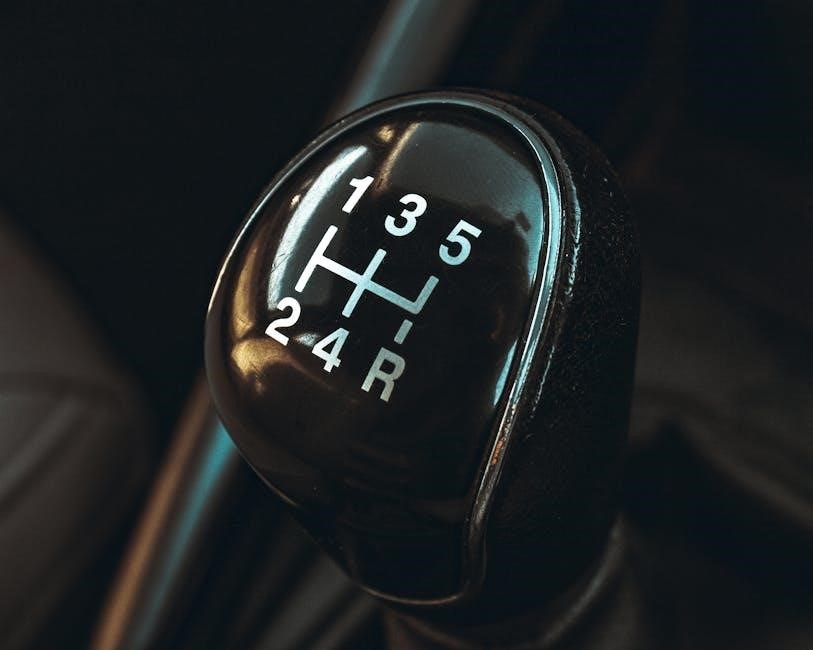
torque converter on a manual transmission
Combining a torque converter with a manual transmission is an unusual setup, historically rare, yet gaining traction through systems like Bruno drives and SISU SA-240 applications.
This integration presents unique challenges, demanding specialized components and careful consideration of performance implications, particularly concerning low-speed torque multiplication and drivetrain stress.
The Uncommon Combination
The pairing of a torque converter with a manual transmission deviates significantly from conventional drivetrain designs. Typically, torque converters are integral to automatic transmissions, providing fluid coupling and torque multiplication.
However, adapting this technology to a manual system, as seen with Bruno Automotive products and the SISU SA-240, is a niche application. This setup aims to blend the benefits of both systems – the driver control of a manual with the low-speed torque enhancement of a converter.
It’s a complex solution addressing specific performance needs.
Historical Context and Rarity
Historically, integrating torque converters with manual transmissions has been uncommon due to engineering complexities and limited demand. Early attempts were often custom builds for specialized applications, like heavy-duty vehicles needing enhanced low-speed power.
The SISU SA-240, utilizing a ZF manual transmission with a clutch/torque converter hybrid, represents a notable example. Bruno Automotive’s systems, while more recent, also remain a relatively specialized solution, primarily for performance or unique operational requirements.
Widespread adoption hasn’t occurred due to cost and complexity.
Understanding the Core Concepts
Successfully merging these technologies requires grasping how torque converters multiply torque, manual transmissions shift gears, and the inherent difficulties of their combined operation.
Understanding stall speed is crucial, as it impacts low-speed performance and overall drivetrain behavior.
How Torque Converters Work
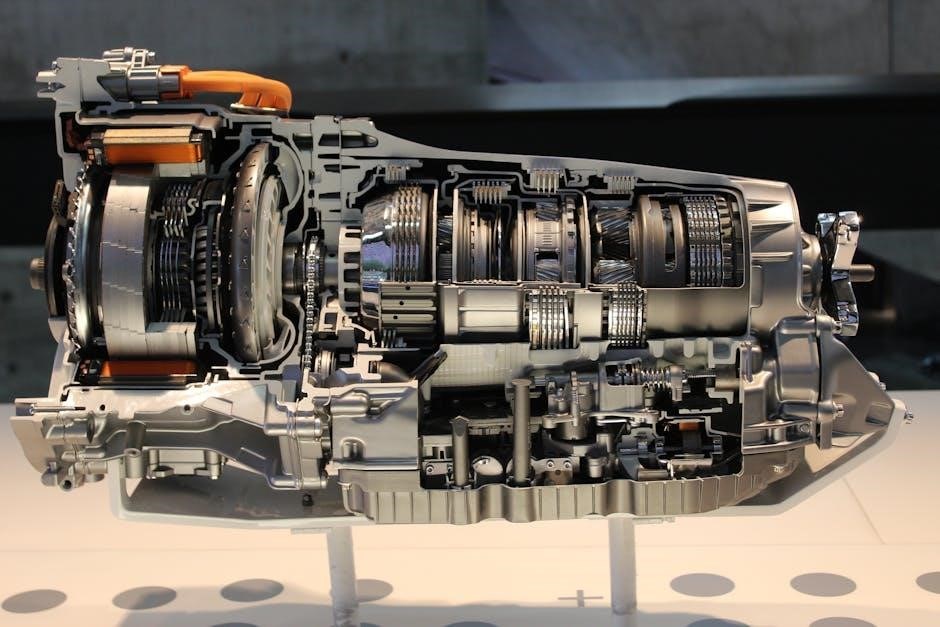
Torque converters utilize fluid dynamics to transmit engine power, employing a pump, turbine, and stator. The pump, driven by the engine, circulates fluid towards the turbine, spinning it and driving the transmission.
Crucially, at low speeds, the stator multiplies torque, providing increased power for acceleration. However, unlike a direct mechanical connection, a torque converter doesn’t fully disconnect, presenting a challenge when paired with a manual transmission’s need for neutral disengagement.
This characteristic impacts drivability and efficiency.
Manual Transmission Fundamentals
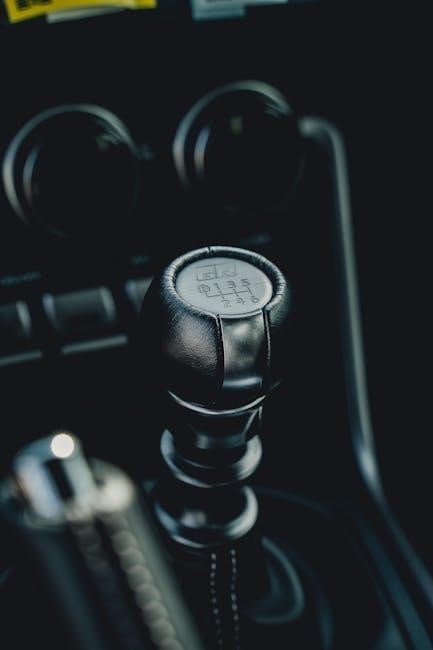
Manual transmissions rely on a driver-controlled clutch to mechanically connect and disconnect the engine from the drivetrain. This allows for gear selection, optimizing engine speed for varying driving conditions.
When the clutch is disengaged, the engine is fully separated, enabling smooth shifting and preventing stalling. This complete disconnection is fundamental to manual transmission operation.
Integrating a torque converter, which doesn’t offer full disengagement, disrupts this core principle, necessitating innovative solutions to replicate clutch functionality.
The Challenge of Integration
Integrating a torque converter with a manual transmission presents significant hurdles. Unlike a traditional clutch, a torque converter doesn’t fully disconnect the engine, leading to continuous power transfer even in neutral.
This constant connection complicates shifting and can cause “engine braking” effects, counteracting the manual transmission’s intended operation. Achieving proper drivetrain disconnection requires specialized mechanisms.
Furthermore, managing stall speed and ensuring adequate torque multiplication at low speeds are critical engineering challenges in this uncommon combination.

Bruno Drive Systems: A Primary Solution
Bruno Automotive Products offers a key solution, adapting torque converters to manual transmissions with a trans brake feature, though installations can be notably expensive, nearing $11,000.
Overview of Bruno Automotive Products
Bruno Automotive Products specializes in high-performance drivetrain components, offering solutions for both automatic and manual transmissions. They provide torque converters, clutch sets, flexplates, flywheels, and a comprehensive range of supporting parts like limited-slip differentials and axles.
Their core offering for this application is the adaptation system allowing a torque converter to function with a manual transmission. This includes the crucial trans brake functionality, enhancing control and performance. Bruno caters to street and strip applications, focusing on torque-hungry builds.
Trans Brake Functionality
The trans brake, a key feature of the Bruno system, provides exceptional control during launches and high-performance maneuvers. It effectively locks the transmission, allowing the engine to build RPM against a stationary vehicle.
This pre-staging capability maximizes power delivery upon release, resulting in significantly improved acceleration. It’s particularly beneficial for drag racing applications, offering a competitive edge. The system requires careful setup and understanding to operate safely and effectively, maximizing its potential.
Cost Considerations for Bruno Installations
Bruno Automotive systems, while offering unique capabilities, represent a substantial investment. A complete installation, including the torque converter adapter and a compatible transmission like a Lenco, can easily approach $11,000 or more.
This cost encompasses not only the core Bruno components but also supporting hardware and potential transmission modifications. Careful budgeting and consideration of long-term performance goals are crucial before committing to such a conversion. It’s a premium solution for specialized applications.
SISU SA-240: An Example of Combined Technology
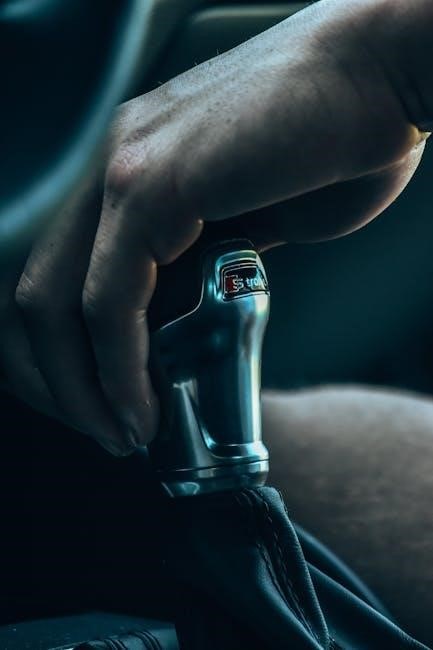
The SISU SA-240 showcases a practical application, utilizing a ZF manual transmission paired with a clutch and torque converter hybrid system for enhanced functionality.
This demonstrates real-world implementation of combining these technologies, offering specific benefits within its intended operational context.
ZF Manual Transmission in SISU Vehicles
SISU vehicles, notably the SA-240, integrate robust ZF manual transmissions, renowned for their durability and performance in demanding applications. These transmissions are specifically coupled with a unique clutch/torque converter system, deviating from traditional setups.
This combination allows for a blend of manual control and the torque multiplication benefits of a converter. The ZF transmission provides reliable shifting, while the torque converter assists in low-speed operation and potentially enhances overall drivetrain efficiency. This innovative approach highlights SISU’s engineering focus on adapting proven technologies for specialized vehicle needs.
Clutch/Torque Converter Hybrid System
The SISU SA-240 employs a sophisticated clutch/torque converter hybrid, offering a unique driving experience. This system doesn’t simply bolt a torque converter onto a manual; it’s an integrated design. The clutch allows for traditional manual gear selection and full drivetrain disconnection.
Meanwhile, the torque converter provides low-speed torque multiplication, aiding in challenging terrain. This hybrid approach aims to balance the control of a manual with the assistance of a torque converter, optimizing performance and usability in demanding operational scenarios.
Specific Applications and Benefits
SISU SA-240 vehicles, designed for demanding off-road and specialized transport tasks, greatly benefit from this combined technology. The hybrid system enhances low-speed control, crucial for navigating difficult terrain and precise maneuvering.
It provides increased pulling power and reduces stalling, improving operational efficiency. This setup is particularly advantageous in applications requiring both manual control and the torque multiplication benefits of a converter, offering a versatile and robust drivetrain solution.
Technical Considerations and Challenges
Integrating a torque converter with a manual transmission presents challenges, including maintaining drivetrain disconnection, managing stall speed, and optimizing low-speed torque multiplication effectively.
Low-Speed Torque Multiplication
Torque converters excel at multiplying torque at lower speeds, a significant advantage when paired with a manual transmission. This characteristic allows an engine to overcome initial inertia more readily, enhancing starting and hill-climbing capabilities.
However, the effectiveness of this multiplication diminishes as vehicle speed increases, as the converter approaches its stall speed. Below this point, torque delivery is limited, potentially hindering performance. Careful selection of the torque converter’s stall speed is crucial for optimizing low-speed benefits without compromising higher-speed efficiency.
Stall Speed and its Implications
Stall speed, the rotational speed at which the torque converter produces maximum torque multiplication, is a critical parameter. A lower stall speed generally favors street driving, offering smoother engagement and better fuel economy. Conversely, a higher stall speed is preferred for racing, allowing the engine to reach its power band quickly.
However, exceeding the torque converter’s stall speed results in slippage, reducing efficiency and generating heat. Selecting the appropriate stall speed requires balancing desired performance characteristics with potential drawbacks, ensuring optimal drivetrain operation.
Maintaining Drivetrain Disconnection
A key challenge with integrating a torque converter into a manual transmission is ensuring complete drivetrain disconnection during shifts. Unlike automatics, manual transmissions require a neutral state for gear changes. The torque converter, however, doesn’t inherently disconnect.
Systems like the Bruno drive address this with a “trans brake” function, mechanically interrupting power flow. Without such a mechanism, attempting to shift would result in significant drivetrain stress and potential damage, highlighting the need for precise control and robust engineering.
Performance Implications
Integrating a torque converter impacts acceleration, fuel efficiency, and overall drivetrain stress. Low-speed torque multiplication can boost initial acceleration, but stall speed is a critical factor.
Careful tuning is essential to optimize performance and mitigate potential drawbacks.
Impact on Acceleration
The introduction of a torque converter fundamentally alters the acceleration profile of a manual transmission vehicle. At lower speeds, the torque multiplication effect significantly enhances initial acceleration, providing a noticeable boost from a standstill.
However, this benefit is heavily reliant on the torque converter’s stall speed; exceeding it diminishes the multiplication effect. Properly matched, the system can deliver quicker launches, particularly beneficial in applications demanding strong low-end torque.
Conversely, improper matching can lead to slippage and reduced efficiency, hindering overall acceleration performance.
Effects on Fuel Efficiency
Integrating a torque converter into a manual transmission system generally decreases fuel efficiency compared to a standard manual setup. The inherent slippage within the torque converter, especially at cruising speeds, generates heat and consumes energy that would otherwise propel the vehicle forward.
While low-speed torque multiplication can aid in certain situations, the overall impact is typically negative. Optimizing the system—matching the converter to the engine and transmission—can mitigate some losses, but a significant improvement is unlikely.
Drivers may notice reduced MPG, particularly during highway driving.
Overall Drivetrain Stress
Introducing a torque converter to a manual transmission increases stress on several drivetrain components. The added load from torque multiplication, and potential for converter lockup issues, places greater strain on the transmission gears, axles, and driveshaft.
The clutch, even with a trans brake system like Bruno’s, experiences altered engagement dynamics. Careful component selection—high-strength materials and robust designs—is crucial to prevent premature failure.
Regular inspection and maintenance become even more vital to manage these increased stresses.
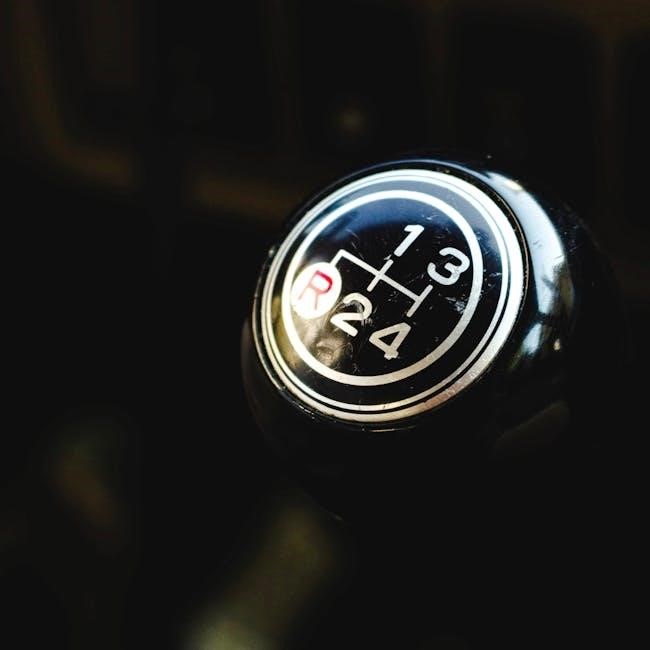
Components Required for Conversion
Successful conversion necessitates flexplates or flywheels, specialized adapters for mounting, and supporting components like modified linkages and potentially a strengthened clutch assembly.
These parts ensure proper alignment and function.
Flexplates and Flywheels
The flexplate, traditionally used with automatics, is crucial for bolting the torque converter to the engine’s crankshaft, replacing the standard flywheel found in manual setups.
However, a direct swap isn’t possible; modified or custom flexplates are often required to accommodate the manual transmission’s bolt pattern and ensure proper balance.
These flexplates must withstand significant torsional stress, especially during trans brake applications, demanding high-quality materials and robust construction. Flywheel choices may also exist, designed to interface with both the converter and manual transmission input shaft.
Adapters and Mounting Hardware
Successfully mating a torque converter to a manual transmission necessitates custom adapters, bridging the dimensional and bolt pattern differences between the two components.
These adapters, often CNC-machined from billet aluminum or steel, ensure precise alignment and secure attachment, preventing vibration and potential damage.
Specialized mounting hardware, including high-grade bolts and reinforcement plates, is essential for handling the increased torque and stress. Proper selection and installation of these components are critical for a reliable and durable conversion.
Additional Supporting Components
Beyond adapters and hardware, a successful conversion demands supporting components to manage the altered drivetrain dynamics.
Upgraded driveshafts and U-joints are crucial to withstand increased torque loads, preventing failure under demanding conditions.
A robust cooling system for the torque converter is often necessary, especially in high-performance applications, to prevent overheating and maintain efficiency.
Furthermore, a modified transmission mount may be required to accommodate the converter’s presence and minimize vibration, ensuring a smooth and reliable operation.
Alternative Approaches and Technologies
Dual-clutch gearboxes (DCG) and continuously variable transmissions (CVT) offer automated shifting without the torque converter’s limitations, presenting viable alternatives.
These technologies provide efficiency and performance benefits, bypassing the complexities of integrating a torque converter with a traditional manual transmission.
Dual-Clutch Gearboxes (DCG) vs. Torque Converters
Dual-clutch gearboxes (DCGs) represent a fundamentally different approach to automated shifting compared to torque converters. Unlike torque converters, DCGs provide a direct mechanical connection, eliminating the inherent slip and energy loss.
DCGs utilize two separate clutches for odd and even gears, enabling incredibly fast and seamless gear changes. This results in quicker acceleration and improved fuel efficiency. While torque converters offer torque multiplication at low speeds, DCGs prioritize responsiveness and direct power transfer, making them a compelling alternative for performance-oriented applications seeking efficiency.
Continuously Variable Transmissions (CVT)
Continuously Variable Transmissions (CVTs) offer a distinct alternative to both traditional automatic transmissions with torque converters and dual-clutch gearboxes. Instead of fixed gear ratios, CVTs utilize a belt-and-pulley system to provide an infinite number of ratios within a specific range.
This allows the engine to operate at its most efficient RPM, potentially improving fuel economy. While CVTs don’t offer the torque multiplication of a converter, they maintain engine efficiency. They represent a different solution for smooth, adaptable power delivery, diverging from the mechanical coupling of a torque converter and manual setup.
Future Trends and Potential Developments
Hybrid manual transmission systems and advanced torque converter designs may emerge, blending efficiency and control. Innovations could optimize integration, addressing current limitations and enhancing performance.
Hybrid Manual Transmission Systems
Emerging systems aim to seamlessly integrate torque converter benefits with manual transmission control. These hybrids seek to leverage the torque multiplication at low speeds offered by converters, while retaining the driver engagement and efficiency of a manual gearbox.
Such designs might incorporate electronically controlled clutches and sophisticated software to manage power flow, optimizing both acceleration and fuel economy. The goal is a versatile drivetrain, offering the best of both worlds – performance and practicality – for diverse driving conditions.
Advanced Torque Converter Designs
Innovations in torque converter technology are crucial for successful manual transmission integration. Modern designs focus on minimizing parasitic loss and maximizing efficiency, addressing a key drawback of traditional converters.
Research explores variable stator geometries and improved impeller/turbine blade profiles to enhance torque multiplication and broaden the effective operating range. Lock-up clutches are also refined for quicker engagement and smoother transitions, ultimately improving fuel economy and drivability in these hybrid systems.