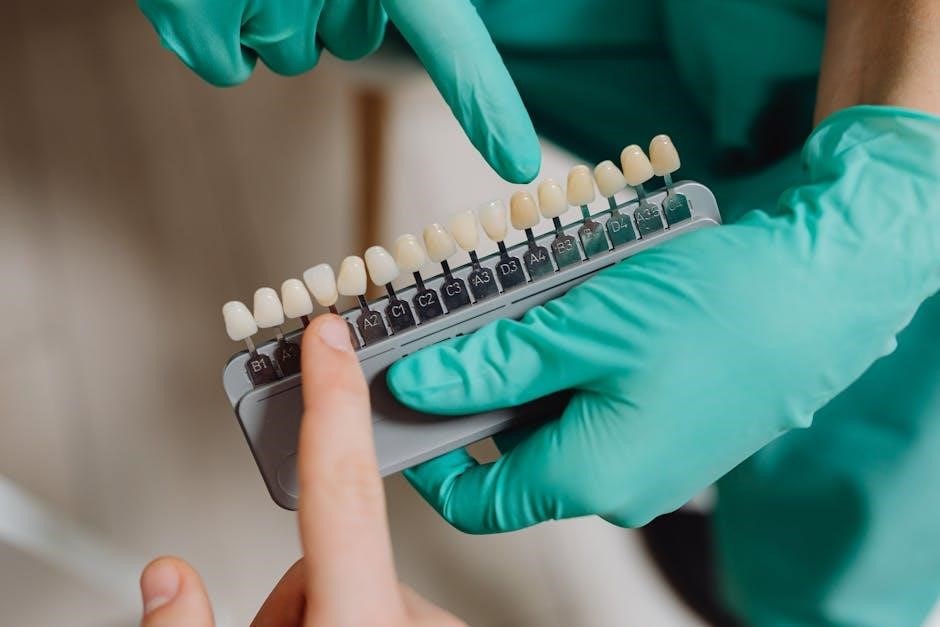
tooth shade guide
Tooth shade guides are essential tools for dentists‚ facilitating consistent and accurate color communication when restoring teeth; achieving aesthetic success relies on them.
Accurate shade selection is paramount for natural-looking dental restorations‚ impacting patient satisfaction and the overall aesthetic outcome of treatment plans.
What is a Tooth Shade Guide?
A tooth shade guide is a standardized system comprised of individual artificial teeth‚ meticulously crafted to represent a spectrum of natural tooth colors. These guides‚ typically arranged by hue‚ value‚ and chroma‚ serve as a visual reference for dentists and dental technicians.
They enable clinicians to select the most appropriate shade for restorations like crowns‚ veneers‚ or fillings‚ ensuring a harmonious blend with the patient’s existing dentition. Guides promote objective communication and minimize subjective interpretation during the restorative process.
Importance of Accurate Shade Selection
Accurate shade selection is critically important because it directly impacts the aesthetic success and patient satisfaction with dental restorations. A mismatch can appear unnatural‚ drawing unwanted attention and potentially affecting the patient’s confidence.
Precise matching ensures restorations seamlessly integrate with the surrounding teeth‚ creating a natural and harmonious smile. It’s a fundamental aspect of modern restorative dentistry‚ demanding careful consideration and technique.

Types of Tooth Shade Guides
Various tooth shade guides exist‚ including Vita Classical‚ Vita 3D Master‚ and Chromascop‚ each offering unique systems for categorizing and matching tooth colors effectively.
Vita Classical Shade Guide
The Vita Classical shade guide‚ a longstanding standard‚ organizes teeth into three main groups: A‚ B‚ and C‚ representing hue. Within each group‚ shades progress numerically from 1 (lightest) to 4 (darkest)‚ indicating value.
Rearranging the guide by value—light to dark—can improve shade selection accuracy. It’s a simple yet effective technique for clinicians striving for optimal aesthetic results with restorations.
Vita 3D Master Shade Guide
The Vita 3D Master shade guide expands upon the Classical system‚ offering a more comprehensive approach to shade determination. It categorizes teeth based on hue‚ value‚ and chroma‚ utilizing a three-dimensional framework.
This system includes five hue groups‚ three value levels‚ and varying degrees of chroma‚ allowing for a more precise match to individual tooth characteristics and improved restorative outcomes.
Chromascop Shade Guide
The Chromascop shade guide presents a unique approach‚ arranging shades in a continuous spectrum rather than discrete tabs. This system emphasizes the perception of color changes and subtle variations within the tooth structure.
It allows clinicians to visually assess and select shades based on a gradient‚ potentially improving the accuracy of shade matching‚ especially for teeth exhibiting multiple or complex color characteristics.
Understanding Shade Guide Components
Shade guides utilize three key components: hue‚ value (lightness/darkness)‚ and chroma (intensity). Mastering these elements is crucial for precise shade replication.
Hue
Hue represents the basic color of the tooth‚ categorized along the yellow-to-red spectrum. It’s the dominant color perception‚ ranging from orange‚ yellow‚ and gray shades. Identifying the correct hue is the first step in shade matching‚ as it significantly influences the overall appearance.
Variations in hue can be subtle‚ requiring careful observation under consistent lighting to ensure accurate assessment and replication during restorative procedures.
Value (Lightness/Darkness)
Value‚ or lightness/darkness‚ dictates how light or dark a tooth appears; it’s a critical component of shade matching. It’s independent of hue and chroma‚ representing the quantity of light reflected. Accurate value assessment is often considered the most important aspect of shade selection.
Arranging shade guides by value‚ rather than hue‚ can significantly improve matching accuracy‚ as it simplifies the perceptual process.
Chroma (Intensity)
Chroma refers to the color’s saturation or intensity – how vivid or dull the shade appears. Higher chroma indicates a more saturated‚ brighter color‚ while lower chroma signifies a more desaturated‚ grayish tone. Assessing chroma accurately requires careful observation under standardized lighting.
It’s the least perceptible component‚ and subtle changes can significantly impact the final restoration’s aesthetic outcome.

Factors Influencing Shade Perception
Shade perception is subjective and influenced by external factors like lighting conditions‚ tooth hydration‚ and metamerism‚ impacting accurate shade matching during restorative procedures.
Ambient Lighting
Ambient lighting significantly alters shade perception; natural daylight is ideal‚ but often unavailable. Artificial lighting‚ particularly fluorescent‚ can introduce spectral biases‚ leading to inaccurate shade selection. Dentists should standardize lighting – utilizing neutral-toned illumination – and minimize surrounding color influences. Consistent lighting ensures reliable shade matching‚ reducing discrepancies between the prepared tooth and the final restoration‚ ultimately enhancing aesthetic outcomes.
Hydration Level of the Tooth
Tooth hydration profoundly impacts shade appearance; a dehydrated tooth appears darker and more saturated. Before shade selection‚ ensure the tooth is adequately hydrated with water or saliva‚ mimicking its natural state. Consistent hydration is crucial for accurate readings‚ as dehydration can lead to a mismatch between the selected shade and the final restoration’s appearance. Maintaining optimal moisture levels is key.
Metamerism
Metamerism describes a phenomenon where two colors appear to match under one lighting condition but differ under another. This impacts shade matching‚ as a restoration may seem correct in the dental office but mismatch outdoors. Dentists must consider metamerism‚ evaluating shades under various light sources to ensure consistent color perception and avoid unexpected discrepancies for patients.
Using a Tooth Shade Guide Effectively
Effective shade selection involves a systematic approach‚ careful comparison to existing teeth‚ and multiple viewings from different angles for optimal restorative results.
Step-by-Step Shade Selection Process
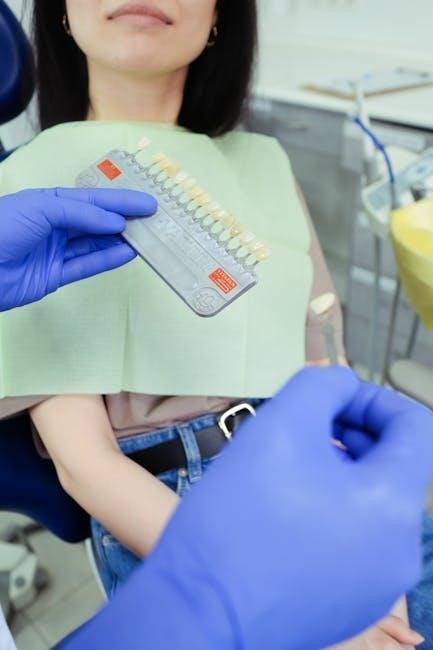
Begin by isolating the tooth and ensuring a clean‚ dry surface. Next‚ select three shades that closely resemble the tooth under consistent lighting. Compare these tabs directly to the natural tooth‚ observing from incisal‚ middle‚ and cervical areas.
Narrow down the choices‚ then hydrate the tooth slightly and re-evaluate. Finalize the shade by considering the surrounding teeth and overall aesthetic goals‚ documenting the chosen shade meticulously.
Comparing to Natural Teeth
When utilizing a shade guide‚ direct comparison to the patient’s natural dentition is crucial. Avoid solely relying on the guide; assess the target tooth alongside adjacent teeth for harmonious blending.
Consider the tooth’s translucency and opacity‚ as these factors influence perceived shade. Observe the incisal edge and cervical areas‚ noting any variations in color. This holistic approach ensures a more accurate and aesthetically pleasing result.
Multiple Viewings & Angles
Shade perception can shift based on viewing angle and distance. Therefore‚ observe the tooth from various perspectives – frontal‚ lateral‚ and occlusal – to capture its true color representation.
Repeat the shade selection process several times‚ ensuring consistency. Different lighting conditions can also affect perception‚ so re-evaluate under varied illumination to confirm the chosen shade remains accurate and visually appealing.

Digital Shade Matching Technology
Spectrophotometers and digital shade guides offer precise color data‚ minimizing subjective errors in shade selection‚ and enhancing restorative dentistry’s accuracy.
Spectrophotometers
Spectrophotometers represent a significant advancement in shade matching‚ utilizing spectral analysis to objectively quantify tooth color. These devices measure the wavelengths of light reflected from the tooth surface‚ providing precise L*a*b* values – a standardized color space.
Unlike visual shade selection‚ spectrophotometers reduce subjectivity and enhance consistency‚ especially crucial for complex cases or when multiple restorations are needed. They minimize the impact of ambient lighting and individual perception‚ offering a reliable and repeatable method for accurate shade determination.
Digital Shade Guides & Apps
Digital shade guides and apps offer a portable and convenient alternative to traditional physical guides. Utilizing smartphone cameras and calibrated color libraries‚ these tools allow dentists to capture tooth shade directly within the patient’s mouth.
These applications often incorporate image processing algorithms to analyze color and provide shade recommendations‚ streamlining the selection process. They facilitate easy shade communication with dental laboratories‚ improving workflow efficiency and restorative accuracy.

Common Shade Matching Challenges
Shade matching can be complex due to variations within a single tooth and the influence of existing restorations‚ demanding careful observation and technique.
Dealing with Multiple Shades in One Tooth
Many natural teeth exhibit a gradient of color‚ being lighter incisally and darker gingivally; replicating this requires assessing multiple areas. Clinicians should evaluate the tooth’s overall chroma and hue variations‚ not focusing on a single point.
Consider the core shade‚ incisal edge‚ and transitional zones when selecting a shade‚ potentially utilizing multiple shades for layered restorations to mimic natural appearance.
Impact of Existing Restorations
Existing restorations‚ particularly those aged or dissimilar in material‚ significantly influence perceived tooth shade; they create optical illusions. When matching‚ assess the surrounding teeth and the restoration’s color‚ considering its translucency and value.
Avoid matching to a discolored restoration; instead‚ aim to harmonize with the adjacent natural teeth for a balanced‚ aesthetically pleasing result.

Shade Guide Maintenance & Calibration
Regular cleaning and storage are vital for shade guide accuracy; contamination alters perceived colors. Calibration checks ensure reliable shade matching over time‚ preventing discrepancies.
Cleaning and Storage
Maintaining shade guide cleanliness is crucial for accurate shade selection. Regularly wipe tabs with a soft‚ damp cloth‚ avoiding abrasive cleaners that can alter surface texture and color. Store the guide in a protective case‚ away from direct light and heat sources‚ which can cause fading or discoloration.
Proper storage prevents physical damage to the tabs and minimizes the risk of contamination from materials like impression materials or polishing compounds‚ ensuring consistent and reliable shade matching during clinical procedures.
Regular Calibration Checks
Periodic calibration of tooth shade guides is essential to maintain accuracy over time. Compare the guide against known standard shades or multiple team members’ assessments. Document any discrepancies observed and consider replacing guides exhibiting significant color drift.
Consistent checks ensure the guide remains a reliable tool‚ minimizing shade mismatches and contributing to predictable‚ aesthetically pleasing restorative outcomes. This proactive approach safeguards treatment quality.
The Future of Tooth Shade Matching
AI-powered systems and personalized guides promise enhanced precision‚ streamlining shade selection and minimizing errors for consistently natural-looking dental restorations.
AI-Powered Shade Selection
Artificial intelligence is revolutionizing shade matching‚ offering objective analysis beyond human perception. These systems utilize advanced algorithms to analyze tooth color‚ considering hue‚ value‚ and chroma with remarkable accuracy. AI can account for variables like lighting and individual tooth characteristics‚ providing dentists with data-driven shade recommendations. This technology minimizes subjective errors‚ leading to more predictable and aesthetically pleasing restorative outcomes‚ ultimately enhancing patient satisfaction and treatment efficiency.
Personalized Shade Guides
Future advancements may involve customized shade guides tailored to individual patient dentition. These guides would consider a patient’s unique tooth characteristics and color variations‚ moving beyond standardized systems. Utilizing digital scans and AI analysis‚ personalized guides promise enhanced accuracy and efficiency in shade selection. This approach minimizes discrepancies and ensures restorations seamlessly blend with the patient’s natural teeth‚ optimizing aesthetic results and patient contentment.

Shade Guides and Different Materials
Material properties influence shade selection; porcelain requires careful consideration of translucency‚ while composite resins demand attention to layering techniques for optimal aesthetic outcomes.
Porcelain Shade Matching
Porcelain’s inherent translucency and ability to mimic natural tooth structure necessitate a nuanced approach to shade selection. Utilizing a shade guide alongside careful observation of the tooth’s value‚ hue‚ and chroma is crucial.
Consider the porcelain layering techniques‚ as different opacities and thicknesses impact the final shade. Mock-ups and try-in shades are vital to confirm a harmonious blend with adjacent teeth‚ ensuring a lifelike restoration.
Composite Resin Shade Selection
Composite resins offer a wider range of shades‚ but can be challenging to match due to their opacity and potential for polymerization shrinkage. Selecting a shade guide tab that closely matches the hydrated tooth is essential. Layering different shades of composite can replicate natural enamel variations‚ improving aesthetics.
Consider the composite’s translucency and how it interacts with underlying tooth structure for optimal results.

Troubleshooting Shade Discrepancies
Identifying mismatch causes – lighting‚ material properties‚ or guide limitations – is crucial. Adjusting techniques‚ like layering or glaze application‚ can refine shade accuracy.
Identifying the Cause of Mismatch
Pinpointing the source of shade discrepancies requires a systematic approach. Consider if the issue stems from inconsistent lighting during initial selection‚ or perhaps alterations in tooth hydration levels post-selection.
Metamerism‚ where colors appear to match under one light but differ under another‚ is a frequent culprit. Evaluate the restoration material itself; variations can occur. Finally‚ assess if existing restorations are influencing perceived shade‚ creating optical illusions.
Adjusting Shade Selection Techniques
Refine your process by re-evaluating shade selection under multiple‚ standardized lighting conditions. Hydrate the tooth consistently before each assessment‚ and utilize a shade guide arranged by value for improved visual discrimination.
Employ digital tools like spectrophotometers for objective measurements‚ minimizing subjective errors. Consider layering different shades of restorative material to mimic natural tooth complexity‚ achieving a more harmonious blend and improved aesthetic results.

Resources for Further Learning
Dental education websites and professional organizations offer courses on shade matching. Continuing education ensures dentists stay updated on evolving techniques and technologies.
Dental Education Websites
Several online platforms provide comprehensive resources for mastering tooth shade selection. These include websites dedicated to restorative dentistry‚ offering articles‚ videos‚ and interactive tutorials. DentalXP and Spear Education are excellent starting points‚ featuring expert insights and practical demonstrations. Additionally‚ manufacturers like Vita and Ivoclar Vivadent often host educational content related to their shade guide systems‚ ensuring users understand optimal application and interpretation for consistently successful outcomes.
Professional Organizations & Courses
Organizations like the American Academy of Cosmetic Dentistry (AACD) offer courses and certifications focused on aesthetic dentistry‚ including detailed shade matching techniques. Hands-on workshops led by experienced clinicians provide invaluable practical experience with various shade guide systems. Continuing education courses approved by the ADA often cover advancements in digital shade matching and color theory‚ ensuring dentists stay current with best practices for optimal restorative results.