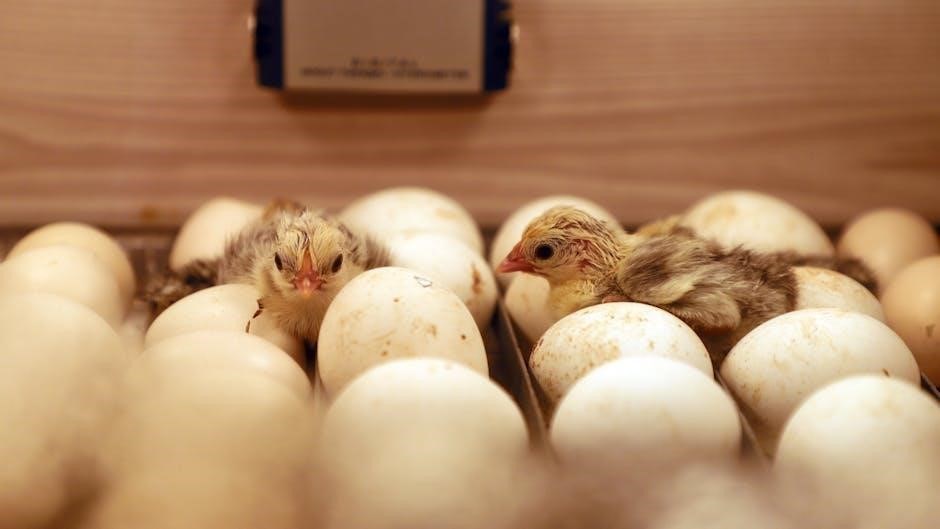
egg incubator user manual pdf
Embark on a new experience! This guide unlocks possibilities with your incubator, mirroring nature’s process, as detailed in various manuals like Hethya’s.
Modern incubators, such as those from REDDDDDDD and Petersimes, offer precise control, automating tasks previously done by the mother bird, ensuring optimal hatching.
What is an Egg Incubator?
An egg incubator is a device that replicates the natural conditions a bird uses to incubate its eggs – maintaining consistent temperature, humidity, and turning. Unlike a natural nest, incubators provide a controlled environment, crucial for successful hatching, as highlighted in user manuals from brands like Hethya and REDDDDDDD.
These machines are essential for poultry farming, research, and hobbyists. Modern incubators, including S-line machines by Petersimes, utilize advanced technology for precise egg shell temperature measurements and adaptations. They eliminate the need for a brooding hen, offering a reliable and scalable solution for hatching eggs. Understanding your incubator’s specific features, detailed in its PDF manual, is key to maximizing hatch rates and ensuring healthy chicks, ducklings, or quail.
Why Use an Egg Incubator?
Utilizing an egg incubator offers significant advantages over natural incubation. It allows for larger-scale hatching, independent of seasonal breeding cycles, and protects eggs from predators or neglect. As detailed in manuals like those for Hethya and REDDDDDDD incubators, precise control over temperature and humidity dramatically increases hatch rates.
Incubators also enable selective breeding programs and research. Advanced models, such as Petersimes’ S-line machines with OvoScan, automate critical measurements, ensuring optimal conditions. The PDF manual provides guidance on maximizing these benefits. Ultimately, an incubator empowers users to reliably and efficiently hatch eggs, surpassing the limitations of natural incubation methods, and achieving consistent results.

Understanding Your Egg Incubator (PDF Manual Focus)
Your incubator’s PDF manual is crucial! It details safety protocols, operational features (like Hethya’s), and troubleshooting, ensuring optimal performance and successful hatching.
Locating and Downloading the PDF Manual
Finding your incubator’s PDF manual is the first step towards successful incubation. Manufacturers commonly host these resources on their official websites. Search for your incubator’s brand (like Hethya or REDDDDDDD) and model number, then navigate to the “Support” or “Downloads” section.
Alternatively, the manual might have been provided as a QR code on the incubator itself, or included on a USB drive in the packaging. If online searches prove fruitless, contact the manufacturer’s customer support directly; they can usually email you a copy. Ensure the downloaded file is from a legitimate source to avoid malware. Saving a digital copy provides convenient access throughout the incubation process, allowing you to quickly reference instructions and troubleshooting tips.
Key Sections of a Typical Incubator Manual
A comprehensive incubator manual, like those for Hethya or REDDDDDDD models, generally includes crucial sections. Expect a detailed “Safety First” segment outlining operational precautions. “Incubator Components” will identify each part and its function. “Temperature & Humidity Control” explains settings for various egg types.
“Incubation Process” details turning schedules and candling guidance. Troubleshooting sections address common issues like temperature fluctuations. Advanced manuals, such as those for Petersimes S-line machines, may cover automated features like OvoScan’s egg shell temperature measurements. Familiarizing yourself with these sections before starting ensures a smooth and successful hatch, maximizing your results.

Incubator Components and Functions
Essential components include temperature and humidity controls, a turning mechanism, and a ventilation system – all working together for optimal egg development, as manuals detail.
Temperature Control System
Maintaining precise temperature is paramount for successful incubation, a point consistently emphasized in incubator manuals like those from Hethya and REDDDDDDD. Modern incubators utilize sophisticated systems, often digital, to regulate heat accurately. These systems typically involve a heating element, a sensor to monitor the internal temperature, and a control unit to adjust the heating element’s output.
The user manual will detail specific temperature settings required for different egg types – chicken, duck, quail – as each species demands a unique thermal environment. Accurate calibration is crucial; manuals provide instructions for verifying the incubator’s thermometer against a reliable source. Fluctuations must be minimized, as even slight deviations can significantly impact embryo development and hatch rates. Proper temperature control ensures optimal conditions for the growing chick.
Humidity Control System
Humidity is as critical as temperature during incubation, a fact underscored in user manuals from brands like Petersimes and Hethya. Incubators employ various methods to maintain appropriate humidity levels, often involving a water reservoir and a ventilation system. The manual will specify humidity percentages needed, varying by incubation stage and egg type.
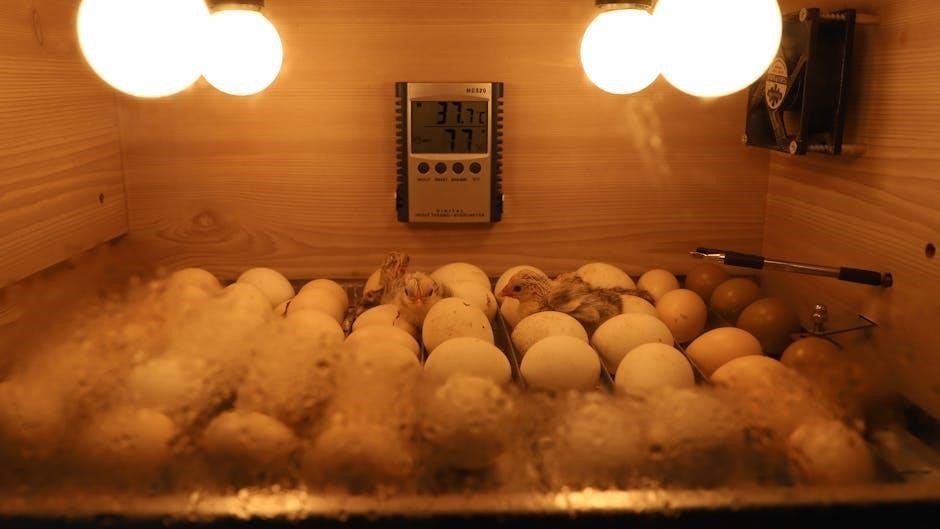
Low humidity can cause excessive moisture loss from the eggs, hindering embryo development. Conversely, high humidity can impede gas exchange, potentially leading to suffocation. Many incubators feature adjustable vents or automated humidity controls. Regularly checking and refilling the water reservoir, as detailed in the PDF, is essential. Precise humidity management directly impacts hatchability and chick health.
Egg Turning Mechanism
Consistent egg turning is vital for preventing the embryo from sticking to the shell membrane, a point emphasized in most incubator manuals, including those for Hethya and REDDDDDDD models. Incubators utilize automatic turning mechanisms, typically rocking trays or rollers, that gently rotate the eggs at predetermined intervals;
The user manual will outline the optimal turning schedule – often every 1-3 hours. Some advanced incubators, like those utilizing S-line machines from Petersimes, integrate turning with precise shell temperature measurements. Manual turning is possible but less consistent. Ensure the mechanism functions correctly throughout incubation; failures can drastically reduce hatch rates. Proper operation, as described in the PDF, is crucial for healthy embryo development.
Ventilation System
Proper ventilation is paramount for supplying oxygen and removing carbon dioxide within the incubator, a detail consistently highlighted in user manuals like those for Hethya and REDDDDDDD. The incubator’s ventilation system typically involves adjustable vents controlling airflow.
The PDF manual will specify appropriate vent settings based on incubator load and environmental conditions. Insufficient ventilation leads to oxygen deprivation and toxic gas buildup, while excessive ventilation causes humidity loss. Maintaining the correct balance, as detailed in the documentation, is crucial. Petersimes’ advanced systems often integrate ventilation control with temperature and humidity regulation for optimal embryo development. Regularly check vents for obstructions.

Preparing for Incubation
Careful preparation is key! User manuals emphasize egg selection, sanitation, and proper incubator placement—vital steps for successful hatching, mirroring natural nesting practices;
Egg Selection and Storage
Prioritize quality for optimal hatch rates! Incubator manuals consistently stress the importance of selecting only clean, uncracked eggs with intact shells. Avoid eggs with abnormal shapes or significant imperfections. Freshly laid eggs generally exhibit higher fertility, but proper storage is crucial if immediate incubation isn’t possible.
Manuals recommend storing eggs pointed-end down at a cool, consistent temperature – ideally between 55-65°F (13-18°C) – and a humidity level of around 75%. Avoid drastic temperature fluctuations. Turning the eggs daily, even during storage, helps prevent the yolk from sticking to the shell membrane, enhancing embryo development. Do not wash eggs, as this removes the protective bloom; simply gently wipe off any visible debris. Following these guidelines, as detailed in resources like Hethya’s manual, significantly increases your chances of a successful hatch.
Sanitation and Disinfection

Maintaining a sterile environment is paramount! Egg incubator manuals universally emphasize thorough sanitation to prevent bacterial and fungal growth, which can drastically reduce hatch rates. Before each incubation cycle, completely disinfect the incubator’s interior, including trays, turning mechanisms, and water reservoirs.
Recommended disinfectants often include diluted bleach solutions or commercially available poultry disinfectants – always follow the manufacturer’s instructions carefully and ensure complete rinsing to remove any residue. Pay close attention to areas that come into direct contact with the eggs. Regular cleaning during incubation, as outlined in guides like those for REDDDDDDD incubators, is also vital. A clean incubator minimizes the risk of contamination and supports healthy embryo development, contributing to a successful hatch.
Incubator Placement and Setup
Proper placement is crucial for consistent results! Incubator manuals consistently advise positioning the unit in a stable, draft-free location, away from direct sunlight and extreme temperature fluctuations. Ideal ambient temperatures generally range between 65-80°F (18-27°C) to minimize the incubator’s workload.
Ensure adequate ventilation around the incubator, avoiding enclosed spaces. Leveling the unit is essential for accurate egg turning, as detailed in Hethya incubator guides. Before powering on, verify the voltage compatibility and use a grounded outlet. Familiarize yourself with all controls and settings as described in your specific model’s PDF manual, preparing for a successful incubation process.

The Incubation Process
Follow your manual closely! Precise temperature and humidity, varying by egg type, are vital, alongside a consistent turning schedule for optimal development.
Temperature and Humidity Settings (by Egg Type)
Crucially, your incubator’s PDF manual details specific settings for each egg type. Chicken eggs generally require a stable temperature of 99.5°F (37.5°C) and humidity around 50-65% during the initial stages.
Duck eggs often need slightly higher temperatures, around 99.8°F (37.7°C), with increased humidity – typically 65-75%. Quail eggs are more sensitive, demanding precise control at 98.6°F (37°C) and 40-50% humidity.
Always consult your manual for precise values! Deviations can significantly impact hatch rates. Remember, these are guidelines; the manual provides tailored instructions for your specific incubator model, ensuring successful incubation and healthy chicks, ducklings, or quail.
Egg Turning Schedule
Your incubator’s PDF manual is paramount for determining the correct turning schedule. Typically, eggs require turning an odd number of times – at least three, but ideally five – per day. This prevents the embryo from sticking to the shell membrane.
Automated turners, common in models like those from Petersimes (S-line), handle this precisely. If manual turning, consistency is key; mark eggs to track completion.
Stop turning three days before the expected hatch date (lockdown). The manual will specify this crucial step. Proper turning ensures even development, maximizing hatch rates and producing healthy offspring, as emphasized in Hethya’s guides.
Candling Eggs
Refer to your incubator’s PDF manual for specific candling instructions. Candling, typically starting around day 7-10, involves shining a bright light through the egg to observe development. This identifies infertile eggs or those with early embryonic death, preventing wasted incubation time.
A dark spot with visible veins indicates a developing embryo. Consistent candling, as detailed in guides like Hethya’s, allows for removal of non-viable eggs, maintaining incubator hygiene.
Avoid excessive candling, as it can cool the egg; Petersimes’ OvoScan technology automates temperature measurements, but manual candling requires careful timing and a consistent process.

Hatching and Post-Hatch Care
Consult your incubator’s manual for lockdown procedures. Successful hatching requires careful monitoring and post-hatch care, mirroring natural nesting behaviors.
Lockdown Procedure
The lockdown phase is critical for successful hatching, and your incubator’s manual provides specific instructions. Typically, lockdown begins a few days before the expected hatch date – usually around day 18 for chicken eggs. Crucially, cease egg turning during lockdown to allow chicks to position themselves for pipping;
Increase humidity levels significantly during this period, as detailed in your manual, to soften the eggshells and aid in hatching. Avoid opening the incubator unnecessarily to maintain stable temperature and humidity. Monitor the incubator closely, but resist the urge to assist chicks unless absolutely necessary; intervention can sometimes be detrimental. Refer to your manual for guidance on recognizing normal hatching progress versus potential problems requiring attention.
Hatching Process Monitoring
Careful monitoring during hatching is essential, but minimal intervention is key. Your incubator’s manual will detail expected timelines and signs of progress. Initially, you’ll observe ‘internal pipping’ – the chick breaking through the internal membranes. This is followed by ‘external pipping’ – a small hole appearing in the shell.
Resist the urge to help chicks emerge; they need the struggle to develop properly. Observe for chicks that appear stuck or are making no progress after prolonged pipping, consulting your manual for guidance. Maintain stable temperature and humidity as instructed. Document observations to learn from each hatch and refine your process.
Chick/Duckling/Quail Care After Hatching
Post-hatch care is crucial for healthy development. Allow chicks/ducklings/quail to fully dry within the incubator before transferring them to a prepared brooder. Your incubator manual likely emphasizes this initial drying period. Provide a warm, draft-free environment with appropriate bedding and access to fresh water and starter feed.
Monitor their eating and drinking habits closely, ensuring all birds are active and thriving. Observe for any signs of illness or weakness, referencing your manual for potential issues and solutions. Maintaining cleanliness in the brooder is vital to prevent disease.

Troubleshooting Common Issues
Refer to your incubator’s manual for solutions to temperature fluctuations, humidity problems, or turning mechanism failures – common challenges during incubation.
Temperature Fluctuations
Addressing temperature inconsistencies is crucial for successful hatching. Your incubator’s manual will detail expected temperature ranges and acceptable deviations for different egg types.
Consistent monitoring, as emphasized in user guides like those for Petersimes and Hethya incubators, is paramount. Fluctuations can stem from power outages, improper ventilation, or a faulty heating element.
The manual will guide you through calibration procedures if needed, and troubleshooting steps to identify the source of the instability. Ensure the thermostat is functioning correctly and that the incubator is shielded from drafts or direct sunlight. Remember, even slight temperature variations can significantly impact embryo development and hatch rates, so diligent attention to detail is key.
Humidity Problems
Maintaining correct humidity levels is vital, as detailed in your incubator’s PDF manual. Both excessively high and low humidity can hinder embryo development and hatching success.
User guides, like those for Hethya and Petersimes incubators, emphasize the importance of regular water replenishment and monitoring humidity gauge readings. Low humidity can cause eggs to lose excessive moisture, leading to stuck chicks.
Conversely, high humidity promotes bacterial growth and can impede gas exchange. The manual will outline how to adjust water tray levels or utilize humidity controls to achieve optimal levels. Proper ventilation, as described in the documentation, also plays a crucial role in humidity regulation, ensuring a stable environment for developing embryos.
Turning Mechanism Failures
Your incubator’s PDF manual provides crucial guidance if the egg-turning mechanism malfunctions. Consistent egg turning is essential for preventing embryos from sticking to shell membranes, as highlighted in Hethya incubator guides.
Manuals detail troubleshooting steps, such as checking power connections, verifying motor functionality, and inspecting the turning rack or rollers for obstructions. If the automatic turner fails, the manual instructs users to switch to manual turning, rotating eggs at least three times daily.
Petersimes documentation stresses the importance of immediate action to prevent developmental issues. Ignoring a turning failure can drastically reduce hatch rates; therefore, understanding the manual’s repair or replacement procedures is paramount for successful incubation;