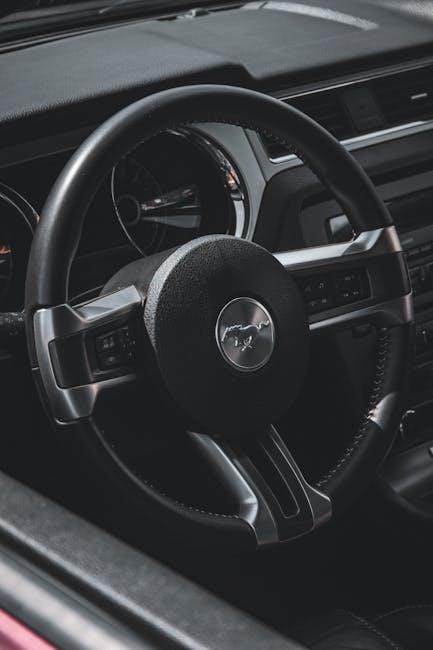
are mustangs automatic or manual
Mustangs have historically offered both automatic and manual transmissions, catering to diverse driver preferences. Over the years, various transmission types have been available,
spanning from the early Fordomatics to modern ten-speed automatics and twin-disc manual options. The choice between them significantly impacts the driving experience,
allowing enthusiasts to select a configuration that aligns with their style.
Historical Overview of Mustang Transmission Options
Throughout its storied history, the Ford Mustang has consistently presented buyers with a choice: the engaging control of a manual transmission or the convenience of an automatic; Initially, in the 1960s, Mustangs debuted with options like the Fordomatic and C-Series automatics alongside 3-speed and 4-speed manual gearboxes. This duality continued through the Mustang II era, featuring the RAD manual and C3/C4 automatics.
The Fox Body generation saw the introduction of the T5 manual and AOD automatic, further refining the options. As technology advanced, so did the transmissions; the SN95 and New Edge Mustangs brought the T5 and 4R70W into the mix, with the Tremec T45 emerging as a performance-oriented manual choice.
More recently, the S197 and S550 generations have showcased Tremec T6060 manuals and sophisticated automatics like the 5R55E, 6R60, and ultimately, the advanced 10-speed automatic. This ongoing availability of both manual and automatic transmissions demonstrates Ford’s commitment to catering to a broad spectrum of driving preferences within the Mustang community.
The Debate: Automatic vs. Manual
The question of automatic versus manual transmissions in a Mustang is a long-standing debate among enthusiasts. Manual transmissions offer a more connected and engaging driving experience, allowing drivers to feel more in control and connected to the car’s mechanics – a sensation many Mustang lovers cherish. This direct control often translates to a more spirited and rewarding drive, particularly on winding roads or at the track.
However, automatic transmissions provide convenience and ease of use, especially in daily driving situations. Modern automatics, like the 10-speed found in newer Mustangs, offer quick and precise shifts, often rivaling the speed of a skilled manual driver. They also eliminate the need for constant clutch engagement and gear changes, reducing driver fatigue.
Ultimately, the “better” transmission depends entirely on individual preference and driving style. Both options deliver a unique Mustang experience, catering to different types of enthusiasts and ensuring there’s a Mustang suited to every driver.

Early Mustang Transmissions (1964-1973)
Early Mustangs offered a choice: the Fordomatic or C-Series automatics, alongside 3-speed and 4-speed manual options. This provided buyers flexibility,
catering to varied driving preferences during the first generation’s production run.
First Generation Mustangs: Available Transmissions
The initial Mustangs (1964-1973) presented buyers with a compelling array of transmission choices, accommodating diverse driving styles and budgets. For those preferring the convenience of an automatic, Ford offered the Fordomatic, initially a two-speed unit, later superseded by the more advanced C-Series transmissions. These automatics provided smooth shifting and ease of use, particularly appealing for everyday driving.
However, the first-generation Mustangs also strongly catered to enthusiasts who favored the greater control and engagement of a manual transmission. A standard three-speed manual gearbox was available, offering a direct connection to the engine. For performance-minded drivers, a four-speed manual transmission was offered, providing closer gear ratios and enhanced acceleration. This four-speed option became particularly popular with those seeking a more spirited driving experience.
The availability of both automatic and manual transmissions ensured that the first-generation Mustang appealed to a broad spectrum of customers, solidifying its position as a versatile and desirable American icon. The choice ultimately depended on individual preferences and intended use.
Manual Transmission Options: 3-Speed and 4-Speed
Early Mustangs offered two primary manual transmission choices: a durable three-speed and a more performance-oriented four-speed. The three-speed, typically a standard offering, provided reliable operation and was well-suited for daily driving. It prioritized simplicity and ease of use, making it accessible to a wider range of drivers. However, it lacked the versatility of its counterpart.
The four-speed manual transmission, often sourced from Toploader, became a favorite among enthusiasts. Its closer gear ratios allowed for more precise control and maximized engine power, resulting in quicker acceleration and a more engaging driving experience. This transmission was frequently paired with higher-performance Mustang variants, enhancing their sporty character.
Choosing between the two depended on driving style and intended use. The three-speed offered practicality, while the four-speed delivered a more visceral and connected feel. Both options contributed to the Mustang’s appeal, allowing drivers to tailor the car to their individual needs and preferences.
Automatic Transmission Options: Fordomatic and C-Series
Ford offered automatic transmission options alongside the manuals, initially with the Fordomatic and later transitioning to the C-Series transmissions. The Fordomatic, prevalent in early Mustangs, represented a significant step towards convenience, eliminating the need for manual gear changes. It provided a smoother, more relaxed driving experience, appealing to those prioritizing comfort over outright performance.
As technology advanced, Ford introduced the C-Series transmissions – specifically the C3 and C4 – offering improved durability and efficiency. The C4, in particular, became a mainstay for V8-powered Mustangs, capable of handling the increased torque and delivering reliable performance. These transmissions featured a conventional torque converter design, providing smooth shifts and enhancing drivability.
The choice between Fordomatic and C-Series often depended on the engine and model year. Both options broadened the Mustang’s appeal, catering to drivers who preferred the ease and convenience of an automatic transmission, solidifying its position as a versatile American icon;

Mustang II and Fox Body Generations (1974-1993)
During these generations, Mustangs featured the RAD manual and C3/C4 automatics. The Fox Body saw the introduction of the T5 manual and AOD automatic, expanding
transmission choices for drivers.
Mustang II Transmission Details: RAD Manual & C3/C4 Automatic
The Mustang II, produced from 1974 to 1978, presented buyers with a straightforward transmission selection. All Mustang IIs equipped with a manual transmission utilized the Borg Warner SR4 model, commonly known as the RAD transmission – a four-speed standard. Identifying the specific RAD model within your vehicle is possible through specific markings and codes.
For those preferring an automatic experience, the Mustang II offered either a C3 or C4 automatic transmission. Notably, all V8-powered Mustang IIs were exclusively paired with the C4 automatic. The C3 was generally found behind the four-cylinder and smaller six-cylinder engines. These transmissions were crucial in delivering power to the rear wheels, defining the driving characteristics of the Mustang II. Understanding these distinctions is key for restoration or repair purposes, ensuring the correct transmission is utilized for optimal performance and authenticity.
Fox Body Transmission Choices: T5 Manual & AOD Automatic
The Fox Body Mustang generation (1979-1993) broadened transmission options, offering enthusiasts a choice between the robust T5 manual and the versatile AOD automatic. The T5, a five-speed manual, quickly became a favorite for its improved shift feel and durability compared to earlier manual offerings. It provided a more engaging driving experience, appealing to those who enjoyed greater control over gear selection.
On the automatic front, the AOD (Automatic Overdrive) transmission was the primary choice. A significant advancement, the AOD incorporated overdrive, enhancing fuel efficiency at highway speeds – a crucial feature during a period of increasing fuel costs. While initially facing some reliability concerns, the AOD proved to be a capable and popular option. The availability of both transmissions allowed Fox Body Mustang buyers to tailor their vehicle to their specific driving preferences, whether prioritizing performance or fuel economy.

The Rise of Overdrive in Automatic Transmissions
The integration of overdrive technology into Mustang automatic transmissions marked a pivotal shift towards improved fuel efficiency and highway cruising comfort. Early Ford automatics, like the Fordomatic and C-series, lacked this feature, resulting in higher engine speeds at sustained highway velocities. The introduction of the AOD (Automatic Overdrive) in the Fox Body era represented a significant leap forward, allowing for lower RPMs and reduced fuel consumption during long drives.
This trend continued with subsequent generations, culminating in the widespread adoption of multi-gear automatic transmissions – six, eight, and even ten-speed units – all incorporating overdrive. These advancements not only enhanced fuel economy but also contributed to smoother acceleration and overall refinement. The inclusion of overdrive became a standard expectation for Mustang automatic transmissions, demonstrating a commitment to both performance and practicality.

SN95 and New Edge Mustangs (1994-2004)
SN95 and New Edge Mustangs offered choices: the T5 manual or the 4R70W automatic. Later, the Tremec T45 manual arrived, enhancing performance and driver engagement.
SN95 Transmission Options: T5 and 4R70W
The SN95 Mustang generation, spanning from 1994 to 1998, primarily featured two transmission options: the robust T5 manual and the versatile 4R70W automatic. The T5, a five-speed manual, was favored by drivers seeking a more connected and engaging driving experience, offering precise gear changes and direct control. It allowed enthusiasts to truly feel the mechanical aspects of the car, a sensation often lost with automatic transmissions.
Conversely, the 4R70W, a four-speed automatic with overdrive, catered to those prioritizing convenience and ease of use. This transmission provided smooth shifts and reduced engine RPMs at highway speeds, enhancing fuel efficiency and comfort during long drives. The 4R70W proved to be a reliable and capable option, appealing to a broader range of drivers.
Both transmissions were paired with the Mustang’s V6 and V8 engine options, offering a choice to suit different performance needs and driving preferences. The availability of both manual and automatic options ensured the SN95 Mustang appealed to a wide spectrum of automotive enthusiasts.
New Edge Mustang Transmissions: Enhanced Performance
The New Edge Mustangs (1999-2004) continued to offer both manual and automatic transmission choices, building upon the foundation laid by the SN95 generation. The five-speed manual T45 transmission was introduced, representing an upgrade over the previous T5, providing enhanced shift quality and durability. This catered to drivers desiring a more refined and sporty manual driving experience.
Alongside the T45, the 4R70W automatic transmission remained a popular option, further refined for improved performance and reliability. The New Edge era saw a growing emphasis on performance, and the 4R70W was capable of handling increased horsepower and torque from the available engine options.

Furthermore, the availability of the Tremec T45 manual transmission offered a more robust and precise shifting experience, appealing to enthusiasts focused on maximizing control and engagement. Both transmission options contributed to the New Edge Mustang’s reputation as a capable and enjoyable performance vehicle, accommodating diverse driver preferences.
The introduction of the Tremec T45 manual transmission in the New Edge Mustangs marked a significant step forward in the availability of driver-focused options. While both automatic and manual transmissions remained available, the T45 offered a noticeable improvement over the earlier T5, appealing to enthusiasts who prioritized a more connected driving experience.
This five-speed manual gearbox was designed to handle increased power and torque, making it a suitable pairing for the enhanced engine options offered during the New Edge era. The T45 provided tighter shift ratios and a more substantial feel, contributing to a more engaging and sporty driving dynamic.
Despite the continued availability of the automatic transmission, the T45’s introduction signaled Ford’s recognition of the demand for a higher-performing manual option. It allowed Mustang drivers to more fully experience the car’s capabilities and enjoy the direct control offered by a manual gearbox, solidifying the Mustang’s appeal to a wider range of drivers.
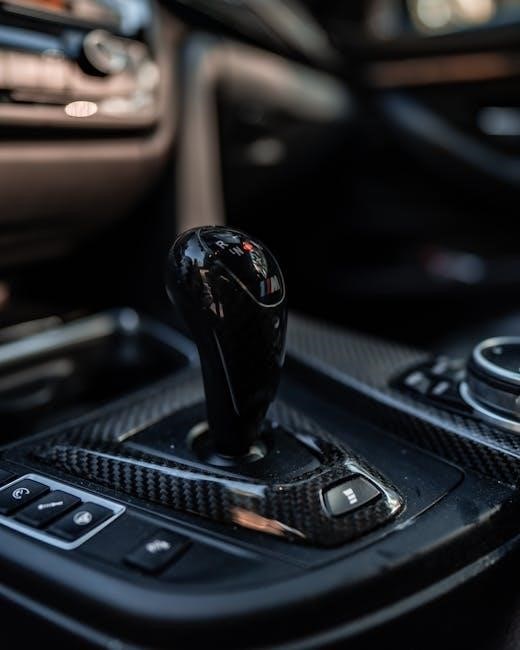
S197 and S550 Mustangs (2005-2023)
During this period, Mustangs continued offering both automatic and manual transmissions. The S197 featured the Tremec T6060, while the S550 introduced the Getrag MT82 and a refined 6R80 automatic.
S197 Transmission Options: Tremec T6060 and 5R55E/6R60
The S197 Mustang generation (2005-2014) presented enthusiasts with compelling transmission choices, continuing the tradition of offering both manual and automatic options. For those seeking a more engaging driving experience, the Tremec T6060 six-speed manual transmission became a standout feature, particularly in GT models. This gearbox was lauded for its robust construction and precise shift feel, enhancing driver control and connection to the vehicle.
However, automatic transmission enthusiasts weren’t left behind. The 5R55E five-speed automatic was initially offered, providing smooth and convenient shifting. Later in the S197’s production run, Ford upgraded to the 6R60 six-speed automatic, further refining shift quality and improving fuel efficiency. Both automatics offered a comfortable driving experience, appealing to a broader range of drivers. The availability of both transmission types ensured the S197 Mustang catered to diverse preferences, allowing buyers to select the configuration best suited to their driving style and needs.
S550 Mustang Transmissions: Getrag MT82 and 6R80
The S550 Mustang (2015-2023) continued the legacy of offering both manual and automatic transmission options, building upon the advancements of previous generations. For drivers prioritizing control and engagement, the Getrag MT82 six-speed manual transmission provided a satisfyingly direct connection to the powertrain. While praised for its robust feel, it also received some critique regarding shift effort, particularly in earlier iterations.
Alongside the manual, the 6R80 six-speed automatic transmission became the standard for many S550 models. This automatic offered smooth and responsive shifting, contributing to both performance and everyday drivability. Later models saw the introduction of a sophisticated ten-speed automatic, further enhancing efficiency and responsiveness. The S550’s transmission choices allowed buyers to tailor their Mustang experience, whether they preferred the immersive control of a manual or the convenience of an automatic.
A significant leap in Mustang transmission technology arrived with the introduction of the ten-speed automatic, initially appearing in the 2018 Mustang GT and subsequently expanding to other models. This advanced transmission represented a substantial upgrade over the previous six-speed automatic, offering quicker shift times, improved responsiveness, and enhanced fuel efficiency. The wider gear ratio spread allowed the engine to operate more consistently within its optimal power band.
While manual transmission enthusiasts remained loyal to the traditional experience, the ten-speed automatic broadened the appeal of the Mustang to a wider audience. It provided a seamless and engaging driving experience, even for those who preferred not to operate a clutch pedal. Coupled with features like paddle shifters, drivers could maintain a degree of control while enjoying the convenience of an automatic. Ford also paired this transmission with MagnaRide adaptive dampers, creating a truly performance-focused package.

Modern Mustang Transmission Technology
Today’s Mustangs feature advanced technologies like twin-disc clutches for manuals and ten-speed automatics. MagnaRide dampers further enhance performance, impacting the overall driving experience significantly;
Twin-Disc Clutch Options for Manual Transmissions
For Mustang enthusiasts who crave ultimate control and performance, twin-disc clutch options represent a significant upgrade within the manual transmission landscape. These clutches, notably available with the six-speed manual in recent GT models, offer substantial benefits over traditional single-disc setups. The dual-disc design dramatically increases the clamping force, resulting in enhanced power handling capabilities and reduced slippage during aggressive driving scenarios.
This increased clamping force translates directly into quicker, more positive shifts and improved acceleration. The twin-disc clutch effectively minimizes power loss, ensuring that more of the engine’s output reaches the wheels. Furthermore, these systems often feature enhanced durability, capable of withstanding the stresses of track use and spirited driving. While adding complexity and potentially a firmer pedal feel, the performance gains offered by a twin-disc clutch are highly valued by those seeking a truly engaging and responsive driving experience in their Mustang.
MagnaRide Dampers and Transmission Performance
The integration of MagnaRide adaptive dampers with Mustang transmissions, initially borrowed from the Shelby GT350, represents a sophisticated approach to optimizing overall vehicle dynamics. These dampers utilize magnetically controlled fluid to adjust damping rates in real-time, responding to road conditions and driver inputs with remarkable speed and precision. This technology doesn’t directly alter the transmission’s internal function, but it profoundly impacts how the car feels during shifts and cornering.
By minimizing body roll and maintaining consistent tire contact, MagnaRide dampers enhance stability, allowing for more confident and controlled gear changes, regardless of whether the Mustang is equipped with a manual or automatic transmission. The improved suspension control translates to reduced wheel hop during launches and sharper handling through turns. Essentially, MagnaRide works in harmony with the transmission, creating a more cohesive and rewarding driving experience, maximizing the potential of both systems and delivering a refined, yet exhilarating, ride.
The Impact of Transmission Choice on Driving Experience
The selection between a manual and automatic transmission in a Mustang fundamentally alters the driving experience, catering to distinct preferences. A manual transmission fosters a deeper connection with the vehicle, demanding active engagement and providing a sense of control that many enthusiasts cherish. It allows drivers to precisely select gears, influencing acceleration and engine braking, and experience the mechanical feedback of the drivetrain.
Conversely, an automatic transmission prioritizes convenience and ease of use. Modern automatics, particularly those with multiple gears and advanced control systems, offer quick and smooth shifts, often matching or even exceeding the performance of a skilled manual driver. This frees the driver to focus on steering and braking, enhancing comfort during daily commutes or long journeys. Ultimately, the “better” choice depends on individual priorities – a manual for those seeking involvement, and an automatic for those valuing simplicity and effortless performance.
Choosing Between Automatic and Manual Mustangs
Mustang buyers historically could choose between automatic and manual transmissions, with options evolving over decades. The ideal choice hinges on personal driving style and desired level of engagement.
Benefits of a Manual Transmission Mustang
For driving purists, a Mustang with a manual transmission delivers a uniquely engaging experience. It allows for a direct connection with the vehicle, granting greater control over gear selection and engine RPMs. This tactile feedback enhances the driving pleasure, particularly for those who enjoy spirited driving or track days.
Choosing a manual gearbox enables drivers to truly feel the car, experiencing nuances often lost in automatic operation. The ability to precisely match engine speed to road conditions provides a level of responsiveness that many enthusiasts crave. Furthermore, a manual transmission can contribute to a more involved and rewarding driving experience, fostering a stronger bond between driver and machine.
Many drivers appreciate the sense of accomplishment and skill involved in mastering a manual transmission. It’s a skill that elevates the driving experience beyond simple transportation, transforming it into an active and engaging pursuit. The availability of twin-disc clutch options in certain models further enhances the performance potential of a manual Mustang.
Advantages of an Automatic Transmission Mustang
An automatic transmission in a Mustang offers a compelling blend of convenience and performance, particularly with modern advancements. The latest ten-speed automatics deliver incredibly quick and smooth shifts, often rivaling or even surpassing the speed of a manual gearbox in certain scenarios. This allows drivers to focus more on the road and less on gear changes.
For daily commuting or navigating congested traffic, an automatic transmission significantly reduces driver fatigue. It eliminates the need for constant clutch engagement and gear selection, providing a more relaxed and comfortable driving experience. Modern automatics also often incorporate features like paddle shifters, offering a degree of manual control when desired.
Furthermore, advanced automatic transmissions, like the 6R80 and 10-speed units, can contribute to improved fuel efficiency and acceleration times. They intelligently select the optimal gear for any given situation, maximizing performance and minimizing fuel consumption. This makes them an attractive option for a wider range of drivers.
Considerations Based on Driving Style and Preference
Ultimately, selecting between an automatic and manual Mustang hinges on individual driving style and personal preference. Drivers who relish a deeply connected and engaging experience, enjoying the tactile feedback and control of shifting gears, will likely gravitate towards a manual transmission. It provides a more immersive and rewarding connection with the vehicle.
Conversely, those prioritizing convenience, ease of use, and a more relaxed driving experience may prefer an automatic. Modern automatics offer impressive performance and efficiency, diminishing the traditional performance gap. Consider your typical driving environment – frequent stop-and-go traffic favors an automatic, while open roads and spirited driving might suit a manual.
Enthusiasts seeking track performance should also weigh their options. While skilled drivers can extract maximum performance from a manual, advanced automatic transmissions with paddle shifters offer consistent and rapid gear changes, potentially leading to faster lap times. The choice is truly subjective and depends on what you value most in a driving experience.