white water rafting guide
White water rafting delivers an exhilarating adventure, blending adrenaline with stunning scenery! It’s a popular summer activity, demanding safety and proper preparation for enjoyment.
Navigating rivers, from gentle flows to challenging rapids, offers a unique experience for all skill levels, creating lasting memories on the water.
What is White Water Rafting?
White water rafting is an outdoor recreational activity that involves navigating a river using an inflatable raft. Typically, a team of individuals paddles together, guided by a skilled raft operator, to maneuver through varying river conditions. These conditions range from calm, slow-moving waters to turbulent, fast-flowing rapids – hence the term “white water,” referring to the foamy, aerated water created by the rapids.
The sport isn’t solely about conquering the rapids; it’s about teamwork, experiencing nature, and embracing the thrill of the river. Rafting trips can vary significantly in length and difficulty, catering to beginners seeking a gentle introduction to experienced adventurers craving a challenging expedition. It’s a fantastic way to connect with the outdoors and create unforgettable memories.
The Thrill and Appeal of River Rafting
River rafting’s core appeal lies in its unique blend of adrenaline, teamwork, and immersion in nature. The thrill of navigating challenging rapids, working in unison with your team, and overcoming obstacles creates an unparalleled sense of accomplishment. It’s a dynamic experience, demanding focus and quick reactions, offering a welcome escape from everyday routines.
Beyond the excitement, rafting provides a chance to witness breathtaking scenery often inaccessible by other means. Floating down a river allows you to connect with the environment in a profound way, observing wildlife and enjoying the tranquility of the wilderness. It’s a sport that appeals to a wide range of individuals seeking adventure and connection.
Understanding River Classes & Safety
River rafting safety hinges on understanding rapid classifications, ranging from Class I (easy) to Class VI (extreme). Choosing a reputable outfitter is crucial for a secure experience.
River Classifications: A Guide to Rapids (Class I-VI)
Understanding river classifications is paramount for a safe and enjoyable rafting experience. Class I rapids are very small rough waves, with few obstructions – ideal for beginners. Class II features straightforward rapids with wide, clear channels.
Class III introduces moderate, irregular waves, requiring some maneuvering skill. Class IV rapids are powerful, unpredictable, and demand precise boat handling. Experienced rafters will tackle Class V, characterized by long, violent rapids and complex maneuvers.
Finally, Class VI rapids are considered extremely dangerous, representing nearly impossible challenges and reserved for expert adventurers. Always assess your skill level and choose a river appropriate for your abilities, prioritizing safety above all else.
Importance of Professional Rafting Outfitters
Choosing a professional rafting outfitter is crucial for a safe and memorable adventure. Reputable outfitters provide experienced guides thoroughly trained in river safety, first aid, and rescue techniques. They maintain well-maintained equipment, including rafts, paddles, and essential safety gear like PFDs and helmets.
Professional outfitters conduct thorough risk assessments of the river, adapting trips to current conditions. They offer appropriate instruction and guidance, ensuring participants understand paddling techniques and safety protocols.
Furthermore, licensed outfitters carry necessary insurance and permits, providing peace of mind. Prioritizing a qualified outfitter significantly minimizes risks and maximizes enjoyment on the river, allowing you to focus on the thrill of the ride.
Essential Gear for White Water Rafting
Proper gear is vital for a safe rafting experience! This includes a well-fitted PFD, helmet, appropriate footwear, and clothing suited to river conditions and weather.
Personal Flotation Devices (PFDs) ⎼ Choosing the Right Fit
Selecting the correct PFD is paramount for safety during white water rafting. A properly fitted PFD will keep you afloat and comfortable throughout your river adventure. Begin by ensuring the PFD is US Coast Guard approved, indicating it meets specific safety standards.
To check the fit, put on the PFD and have a friend perform a range-of-motion test. Raise your arms above your head; the PFD shouldn’t ride up over your chin. Next, tighten all straps to achieve a snug, secure fit – not too tight, but firm enough that the PFD doesn’t shift during movement.
Consider the PFD’s buoyancy rating, ensuring it’s appropriate for your weight and the river conditions. Different PFDs offer varying levels of flotation. Regularly inspect your PFD for any damage, such as tears or broken buckles, before each trip.
Helmets and Footwear: Protection is Key
Protecting your head and feet is crucial when white water rafting. A properly fitted helmet safeguards against head injuries from rocks and collisions, especially in turbulent rapids. Ensure the helmet fits snugly and doesn’t wobble, with the chin strap securely fastened.
Footwear is equally important, providing traction and protecting your feet from sharp rocks and riverbed obstacles. Closed-toe shoes are essential; avoid flip-flops or sandals. Neoprene booties or sturdy water shoes offer excellent protection and grip.
Consider footwear that straps securely to your feet to prevent loss in the river. Inspect both your helmet and footwear for any damage before each rafting trip. Prioritizing these protective measures significantly enhances your safety and enjoyment on the water.
Appropriate Clothing for Rafting Conditions
Choosing the right clothing is vital for a comfortable and safe rafting experience. Avoid cotton, as it loses its insulating properties when wet and can lead to hypothermia. Opt for synthetic materials like polyester or nylon, which dry quickly and retain warmth.
Layering is key, allowing you to adjust to changing weather conditions. A base layer wicks away moisture, a mid-layer provides insulation, and an outer layer offers protection from wind and water.
Consider a wetsuit or drysuit for colder waters. Sun protection is also crucial; wear a long-sleeved shirt, hat, and sunglasses. Remember to bring a change of clothes for after the trip!

Rafting Techniques & Paddling Basics
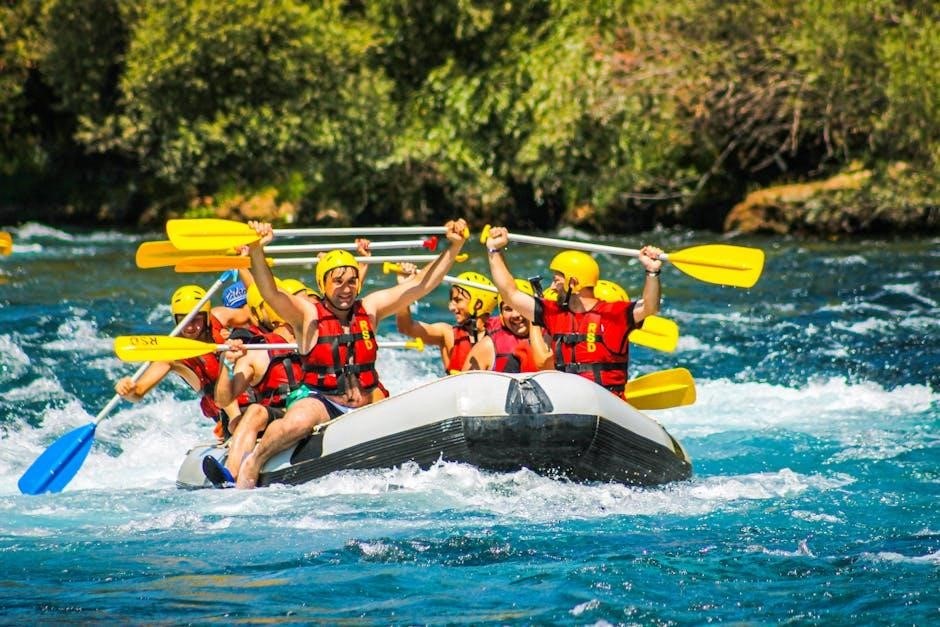
Mastering basic paddling strokes – forward, back, and draw – is essential for maneuvering the raft effectively. Teamwork and communication are also key!
Basic Paddling Strokes: Forward, Back, Draw
Forward paddling involves planting your blade fully submerged and pulling it through the water, keeping it close to the raft’s side for maximum power. Synchronized forward strokes propel the raft ahead.
Back paddling is the reverse – blade enters the water near your hip and pushes backward. This slows or stops the raft, crucial for navigating obstacles. Consistent, even strokes are vital.
The draw stroke pulls the raft sideways. Extend your blade out and sweep it in an arc towards the raft, effectively “drawing” the boat in that direction. This is essential for precise positioning and avoiding hazards. Practice these strokes individually and then in coordination with your team to ensure smooth and controlled rafting.
Defensive Paddling & Self-Rescue Techniques
Defensive paddling prepares you for unexpected events. High-side paddling, where all paddlers on one side dig deep, lifts the raft over obstacles or prevents capsizing. Practice quick, powerful strokes on command.
If someone falls overboard, self-rescue becomes critical. Immediately paddle towards the swimmer, creating a safe eddy. Extend an oar or throw a rope for them to grab.
The “ferry” technique allows you to angle the raft across the current to reach a stranded swimmer. Knowing how to brace – leaning into the rapid while maintaining a low center of gravity – enhances stability. Prioritize swift action and clear communication during any rescue scenario. Regular drills build confidence and competence.
Safety First: Key Considerations
Prioritize safety on the river! Stay hydrated, use sun protection, recognize hazards, and understand emergency signals for a secure and enjoyable rafting experience.
Hydration and Sun Protection on the River
Staying hydrated is paramount during white water rafting adventures. The sun’s reflection off the water intensifies its rays, leading to rapid dehydration. Consistently drink plenty of water before, during, and after your trip – even if you don’t feel thirsty!
Sun protection is equally crucial. Apply a waterproof, high-SPF sunscreen liberally and frequently, especially to exposed skin. Wear a hat with a brim to shield your face and neck, and consider wearing sunglasses with UV protection.
Long-sleeved shirts and water pants can also offer additional sun protection. Remember, the river environment amplifies the sun’s effects, making consistent protection vital for a comfortable and safe experience. Ignoring these precautions can quickly lead to sunburn, heat exhaustion, or even more serious health issues.
Recognizing and Avoiding River Hazards
River hazards are inherent to white water rafting, demanding constant vigilance. Be aware of potential dangers like rocks, strainers (trees or debris catching water flow), and unexpected drops. Your guide will point out specific hazards, but proactive observation is key.
Strainers are particularly dangerous, as they can pin rafts or individuals underwater. Avoid areas with downed trees or dense vegetation near the riverbank. Rocks require skillful maneuvering; listen to your guide’s instructions for paddling around them safely.
“Foot entrapment” is a serious risk in swift currents – never stand in moving water. Always follow your guide’s directions and maintain a defensive paddling position to react quickly to changing conditions. Recognizing and avoiding these hazards significantly enhances your safety on the river.
Emergency Procedures and Signals
Emergency procedures are crucial for safe rafting. Before launching, your guide will explain self-rescue techniques and what to do if someone falls overboard. Knowing these procedures can be life-saving in a critical situation.
Standard signals are used for communication on the river. A raised paddle indicates a need to stop, while specific hand signals convey directions like “paddle forward” or “brace.” Pay close attention during the safety briefing to understand these signals.
If a raft capsizes, remain calm, locate your PFD, and follow your guide’s instructions. Practice the “defensive swimming” position – feet first, facing downstream – to protect yourself from rocks. Knowing these procedures and signals ensures a coordinated response during emergencies.
Choosing the Right Rafting Trip
Selecting a trip depends on your skill and desired river intensity. Guided trips are ideal for beginners, while experienced rafters might prefer independent adventures.
Factors to Consider: Skill Level, River Location
Carefully assess your rafting experience before choosing a trip. Beginners should opt for Class I-III rivers with professional guides, ensuring a safe and enjoyable introduction to the sport. More experienced rafters can tackle Class IV-V rapids, demanding advanced skills and physical fitness.

River location significantly impacts the rafting experience. North American rivers like the Colorado and Salmon offer diverse challenges, while international hotspots like the Zambezi provide unique adventures. Consider the river’s flow rate, potential hazards, and surrounding scenery when making your decision.
Research the specific section of the river, understanding its difficulty and any required permits or reservations. Matching your skill level to the river’s characteristics is crucial for a memorable and safe rafting trip.
Guided vs. Independent Rafting Trips
Guided rafting trips are highly recommended, especially for beginners. Professional outfitters provide essential safety briefings, equipment, and experienced guides who navigate the river and manage potential hazards. This ensures a secure and informative experience, maximizing enjoyment and minimizing risk.
Independent rafting requires significant experience, expertise, and thorough planning. It involves securing permits, transporting equipment, and navigating the river independently, demanding a deep understanding of river dynamics and self-rescue techniques.
Consider your skill level and comfort with risk. Guided trips offer peace of mind and valuable instruction, while independent trips provide freedom and a more challenging adventure. Prioritize safety and responsible river practices regardless of your chosen approach.
Popular White Water Rafting Destinations
North America boasts iconic rivers like the Colorado, Gauley, and Salmon, offering diverse rafting experiences. Internationally, Nepal, Zambia, and Costa Rica present thrilling adventures!
Top Rafting Rivers in North America
North America is a paradise for rafting enthusiasts, offering a spectrum of rivers catering to all skill levels. The Colorado River, famed for its Grand Canyon expeditions, provides multi-day adventures through breathtaking landscapes. For intense whitewater, the Gauley River in West Virginia delivers challenging rapids, particularly during its annual release flows.
The Salmon River in Idaho, known as the “River of No Return,” offers both thrilling rapids and serene wilderness stretches. New River in West Virginia is another popular choice, offering a mix of exciting rapids and beautiful scenery. Kennebec River in Maine provides a classic New England rafting experience. Finally, the Futaleufú River, while technically in Patagonia (shared by Chile and Argentina), is often accessed from North America and is renowned for its turquoise waters and powerful rapids.
International Rafting Hotspots
Beyond North America, the world boasts incredible rafting destinations. Nepal’s Sun Kosi River is legendary, offering multi-day trips through remote landscapes and challenging rapids. Zambezi River in Zambia and Zimbabwe provides world-class whitewater below Victoria Falls, known for its massive waves and intense action.
Futaleufú River in Patagonia (Chile/Argentina) is consistently ranked among the world’s best, with turquoise waters and powerful rapids. Bio Bio River in Chile offers a variety of sections, from beginner-friendly to expert-level challenges. Magpie River in Canada, though often grouped with North American destinations, offers a truly remote and wild experience. Finally, Tara River Canyon in Montenegro, Europe’s deepest canyon, provides stunning scenery and exciting whitewater.